Showing posts with label Connoisseur's Choice. Show all posts

Wednesday, 10 October 2018

Connoisseur's Choice: Glenn Hughes


Hailing from Cannock in Staffordshire, Glenn Hughes has carved out a fine career in music over the years, and continues to do so. Dubbed 'The Voice Of Rock', this man's vocals are instantly recognisable on every record he has been a part of, bringing to them a unique form of soul-tinged rock. His craft has only improved with age, as you can hear in the progression from the young raw voice in Trapeze, through to the smoothness in Deep Purple, his solo records, right up to Black Country Communion.

One of the harder working characters on the scene, Glenn Hughes brings his talent to venues across the world, blessing our ears with sublime vocals and bass playing. His latest tour, 'Glenn Hughes Performs Classic Deep Purple Live', pays homage to one of the greatest rock bands in musical history, as well as acknowledging the part he played in contributing to their achievements. Deep Purple fans of the Mk III and Mk IV eras will be delighted to hear a set consisting purely of Deep Purple tracks, which Hughes has either recorded in the studio or performed live (therefore including a couple of Mk II tracks). Hughes has not performed an exclusive Purple set since their last show in Liverpool, 1976.

Looking forward to the London date of this tour on October 15th, we take a look at Glenn Hughes' finest work. It's certainly a hard task to choose only a handful of records from such a vast and impressive back catalogue.

Trapeze - You Are The Music... We're Just The Band (1972)


Trapeze initially made themselves known to the world as a five-piece band from the West Midlands. In 1970 they released a rambling, mildly psychedelic debut before shedding two members and becoming the hard rock trio that recorded the powerful Medusa LP. They were to reach their peak in 1972 with the album we're looking at here, You Are The Music... We're Just The Band.

While subsequent history has ensured that Trapeze is very much regarded as an early vehicle for the talents of Glenn Hughes, it would be wrong to overlook the songwriting skills of Mel Galley - who would later appear briefly in one of the many line-ups of Whitesnake - not to mention his magnificent guitar tone and tasteful playing. On drums Dave Holland supports their efforts with a genuinely musical approach that is a far cry from the meat and potatoes style he was later to pursue with Judas Priest in the early 1980s.

Finding a weak spot on this album is near impossible, it's a profoundly satisfying experience for the listener throughout. Primarily the music fits comfortably into the hard rock bag, but there are elements of heavy funk and soul too. The opening track 'Keeping Time' grabs attention with an early example of double bass drumming. At the other end of the spectrum, we have the elegant 'Coast To Coast'. For the most part though, it's thick riffs and hefty grooves all the way, with Hughes reaching some terrifying vocal heights.  (GC)

Deep Purple - Burn (1974)


The double departure of Ian Gillan and Roger Glover in 1973 may have given Deep Purple fans cause for concern, but with the determination of Ritchie Blackmore, Jon Lord and Ian Paice, the band refused to fold. They had already started looking for a replacement bassist (which may have caused Roger to bail out before he was removed), and went on to recruit Trapeze vocalist/bassist Glenn Hughes. Initially dubious, he was persuaded by the notion that they would enlist the singing talents of Free frontman, Paul Rodgers and vocal duties would fall between the pair of them. Alas Rodgers, although initially intrigued, declined the offer and went on to form his own band Bad Company. This could be seen as a blessing in disguise, as without the chance to hold auditions for a second 'lead vocalist', unknown Saltburn-by-the-Sea based singer David Coverdale may not have come into the mix.

The deep, husky, bluesy voice of Coverdale harmonised with Hughes' cleaner and higher pitched style, creating a vocal partnership that could have been made in heaven. Burn thrust Deep Purple back into the limelight with a bang; the opening self-titled track an absolute powerhouse of frenzied riffs layered with keys over a tight rhythm section. The hard rock style of Deep Purple got an injection of soul from their new recruits, creating the embryonic sound that was to be explored on later albums. Burn truly showcased the talents of each member, as the vibe throughout the whole album flows seamlessly, from groovy tracks such as 'Lay Down, Stay Down' and 'You Fool No One' to the stunning slow-burners 'Mistreated' and 'Sail Away'. Watch Deep Purple's set at 1974's 'California Jam' if you can. You wont be disappointed by the pure magic.  (MG)

Deep Purple - Stormbringer (1974)


The funky stylings of this Burn follow up might have resulted in the departure of an unimpressed Ritchie Blackmore but to our ears, it’s pure groovin’ bliss. The combined lead vocals of Hughes and Coverdale weave a special kind of magic throughout the entire record - from the climactic fever of the opening title track right through to the touching and truly beautiful closing ballad ‘Soldier Of Fortune’. There’s plenty of soul present, courtesy of Glenn Hughes, particularly in the form of ‘Holy Man’ and ‘Hold On’ and although Blackmore has no praise for the album himself, as Hughes puts it, “Ritchie Blackmore is damn funky, whether he likes it or not. He played wonderfully on the album.” Deep Purple backbone Paice, of course takes to the new sound like a duck to water as does the ever impressive Lord. This writer would challenge anyone who claims that funk has no place in hard rock to get through Stormbringer without breaking into song and dance.  (LD)

Deep Purple - Come Taste The Band (1975)


The one and only album to come out of the Mk IV line-up and the last Deep Purple album from the 1970s, Come Taste The Band is a musical triumph in its own right. Although there have been debates as to whether it can be considered a true Deep Purple album, there is no doubting the quality of musicianship involved. Here at Born Again, it's an absolute favourite.

Once again finding themselves back at square one with the exit of Ritchie Blackmore (one of the band's founding members), the vital position of 'lead guitarist' needed to be filled. Enter the highly rated Tommy Bolin, fresh from a brief stint in the post-Joe Walsh line-up of James Gang. There are conflicting stories of how he came to be in the band, but free from the limiting (albeit, genius) shackles of Blackmore, the band was allowed to explore the outer reaches of their style, with Bolin bringing in even more funk to compliment the sound that Glenn Hughes contributed. Together with the founding duo of Lord and Paice and the now unique dual lead vocals of Hughes and Coverdale, the line-up was complete again.

The recording process and, more pointedly, the subsequent tour were affected to some extent by the personal demons of certain members of the band. However, despite that, the album demonstrates the remarkable array of talent in the group. The stellar opening track 'Comin' Home' setting the guitar-driven tone of the album. Although very different to the classically-influenced Blackmore, Bolin's laid back but intricate playing style propelled the 'new' Deep Purple sound admirably. The fun-loving 'Gettin' Tighter' is a highlight on the album for Hughes as he takes centre stage with vocals, and even drives a funk-inspired break with Bolin halfway through the track.  As well as backing vocals on 'Comin' Home', Bolin also contributed a lead vocal to the mid-section of' 'Dealer'.

Lord's exquisite piano playing coupled with the emotionally powerful vocals of Hughes join in perfect harmony on the first part of 'This Time Around / Owed To 'G', which then leads to a magnificent piece of guitar work by Bolin, driven by the force that is Ian Paice. If we were to sit here and pick out the best tracks on Come Taste The Band, every single song would make an appearance on the list, but one that maybe stands out above the rest is the album closer 'You Keep On Moving'. What an absolutely perfect ending to a brilliant album, a masterpiece which was written by Hughes and Coverdale for 1974's Burn, yet rejected by Blackmore at the time. Much to our auditory delight, it was finally committed to vinyl. And what a show-stopping number it is.  (MG)

Glenn Hughes - Play Me Out (1977)


After the disintegration of Deep Purple Mk IV in 1976, Glenn Hughes returned to the studio to record a solo album that pushed his love of soul music to the fore. Originally surfacing in 1977, Play Me Out received little in the way of promotion and the few Purple fans that encountered it often had trouble relating to the absence of hard rock.

For these reasons and others that we will touch on here, it would be fair to consider the LP something of a lost classic. It has aged well and exudes an air of sincerity. Hughes was clearly making the music that he felt deeply, regardless of whatever expectations some might have thrust on him. Much has been made of his supposed fixation with the work of Stevie Wonder, and while that influence - as well as an apparent fondness for Donny Hathaway - is hard to deny, this is a recording that could only have been made by Glenn Hughes.

The writing, arrangements and performance reveal a supremely gifted artist at work, one unafraid to follow his instincts. If you love the Coverdale/Hughes era of Purple and have yet to investigate Play Me Out, then you know exactly what to do now.  (GC)

Hughes/Thrall – Hughes/Thrall (1982)


Five years after the release of his solo album Play Me Out, Hughes got together with former Pat Travers guitarist Pat Thrall in Los Angeles for a collaboration that resulted in the appropriately-titled Hughes/Thrall album. Taking Hughes into a different direction, now with added synth, and rock/pop driven tracks, his distinctive vocals still stand out; soulful, tinged with a rock edge, ever adaptable to any style of music. Although the album failed to make much impact upon its release, it's definitely an over-looked gem of its time. From melodic and catchy tracks such as 'The Look In Your Eyes' to power-driven ones like 'I Got Your Number' and 'Muscle And Blood' (the latter which often makes an appearance in Glenn Hughes' live solo sets), Hughes/Thrall epitomizes the classic sound of radio rock from that era. Let's not forget the brilliant guitar playing of Pat Thrall. The album could have gone further with more promotion, but unfortunately due to continuing problems with drugs, momentum for the record was stunted.  (MG)

Phenomena – Phenomena (1985)


The first time someone recommended Phenomena to me, I had no idea that Glenn Hughes was featured on it. Until that first echoey vocal line from ‘Kiss of Fire’ sounded, it immediately became one of my most favoured albums. Featuring the likes of Mel Galley, Cozy Powell, Ted McKenna and Don Airey (to name but a few) this album is made up of many respected rock musicians. Full of ultimate AOR goodness and displaying so much talent in each individual instrument consistently on every track. Songs like ‘Still the Night’ and ‘Dance With the Devil’ are melodic masterpieces, but it’s Glenn who once again brings that raw sentiment to surface. Like no other.  (KG)

Black Sabbath - Seventh Star (1986)


Never heard Seventh Star? Just one spin and you’ll be sold. If there’s one thing Glenn knows how to do, it’s how to collaborate and this time with none other than Tony Iommi - the guitar master who has this relentless skill of turning everything he touches to gold. And when you throw Hughes into the mix, well, you have an album like no other. This 'Black Sabbath' album however, is criminally over-looked and underrated which is a real shame. It has a truly dark, cutting atmosphere which can be incomparable. Darkness, power and passion runs through Hughes’ emotional vocals as each song cuts right through you. Songs like ‘Danger Zone’, ‘Heart On a Wheel’ and ‘In For the Kill’ encompass everything that a Sabbath and/or Purple fan could possibly be looking for, with added depth and feeling. A must-have album!  (KG)

HTP - Hughes, Turner Project (2002)


What do you get when you put two of rock’s most esteemed vocalists together? You get the brilliant Hughes Turner Project… and what a debut album it is! With what could be considered pretty average song writing, the vocals alone make this album what it is. Mind blowing vocal melodies and power from start to finish, both Joe Lynn Turner and Glenn Hughes are the perfect duo... not to mention the addition of Mr John Sykes on ‘Heaven’s Missing an Angel’. It wouldn’t be untrue to admit that Hughes’ vocal range does surpass that of Joe Lynn, particularly as he showcases both his bluesy tones and ability to blow the roof off with his impressive range. Regardless, this is an album worth having in your collection for the vocals alone. Both Joe and Glenn make this album what it is and we’re just waiting for the day they bring these songs to the stage once more!  (KG)

Black Country Communion - Black Country Communion (2010)


Born out of a jam session between Hughes and Joe Bonamassa, Black Country Communion came thundering along in 2010 to assure the world that Mr Hughes had yet more to offer. With Jason Bonham and Derek Sherinian completing the line-up, the self-titled debut is an example to all ‘supergroups’ of how things should be done. Hughes’ vocals are on top form from start to finish, the best they’ve been in many years. His belting out of that soulful power he’s best known for is goosebump inducing. Bonamassa lends this album a sexy, bluesy touch but there’s no shortage of a hard hitting rock sound in his playing. The quality of the music is so consistent here that it’s genuinely difficult to pick out key tracks but at a push, ‘The Great Divide’ and ‘Down Again’ couldn’t fail to hook any listener in.  (LD)


Intro: M Godding
Contributors: M Godding, Kayleigh Griffin, Louise Dornan & George Colwan

Monday, 27 August 2018

Raven Lunacy: Ten of the greatest Raven moments, 1980 - NOW


If you're bothering to read this, it's likely that you are familiar with - and maybe even a staunch admirer of - that era of rock music we now call the 'New Wave of British Heavy Metal'.  And assuming that this is the case, then you must surely know the work of Raven. 

Alongside Iron Maiden, Def Leppard and Saxon, Raven is one of the few bands that emerged with, and yet also transcended, the NWOBHM movement. Many acts came to prominence during this time, but only a select few can claim to have an unbroken history like these Geordie stalwarts. The never-say-die spirit of brothers John and Mark Gallagher is simply unsurpassable.

Raven began in Newcastle during the mid seventies and solidified their line-up with Rob 'Wacko' Hunter on drums before signing to Neat Records in 1980. Stylistically their hallmark was (and is) a frenetic delivery of intense riff-driven rock music with urgent, high-pitched vocals. There is a type of mania and intensity in Raven that cannot be found elsewhere. 

A spell on Atlantic Records in the mid eighties led briefly to a more commercial approach, but before long the Gallagher lads were back with new drummer Joe Hasselvander. They're still out there now, intimidating all and sundry to this very day.

Here's a quick trawl through some of your correspondent's favourite Raven moments.

1) Don't Need Your Money (Neat single, 1980) 
Following years of graft on the pub and club circuit in north-eastern England, this was Raven's introduction to the wider public. And what an introduction it was. The sawn-off-shotgun energy of the tune coupled with the infectious acapella chorus meant that this single was instantly burned into the consciousness of all who encountered it. 

2) Tyrant Of The Airways (Rock Until You Drop album, Neat, 1981)
A remarkably mature piece of work, given the youth of the characters involved. The song takes you on a journey that begins in brooding fashion then accelerates into the speedy Raven insanity that many of us have come to revere. Then all of a sudden it takes a tranquil, melodic detour before reaching a devastating climax... Said the actress to the bishop.

3) Read All About It (Wiped Out album, Neat, 1982)
Alright, let's have it. Thunderous drum opening, compelling guitar hook, eccentric lyrics - it's all here, delivered with the usual Gallagher panache.

4) Rock Hard (Crash Bang Wallop 12" EP, Neat, 1982)
Here's a superb example of Raven versatility. The snappy guitar introduction has something of a southern rock feel and - out of the blue - Mark Gallagher takes the microphone. Again, catchy as hell. 

5) The Ballad Of Marshall Stack (b-side of Neat single, 1983)
This little gem deserved far more than simply being relegated to the flip side of 'Break The Chain'.

6) Take It Away (All For One, Neat, 1983)
There's almost a pop aesthetic here. 'All For One' was an impressive leap for Raven in terms of recording quality, and the songs appeared to be a lot more focused too. 

7) Screamin' Down The House (The Pack Is Back, Atlantic, 1986)
From the much-maligned major label period of the band, this contagious offering cannot be denied. Unless you are deaf. But even then, possibly not.

8) Laying Down The Law (Nothing Exceeds Like Excess, Combat/MFN, 1988)
1987 was potentially a tricky year for the Gallagher lads, what with the departure of Rob 'Wacko' Hunter and the end of their tenure on Atlantic Records. With little hesitation, they enlisted ex-Pentagram drummer Rob Hasselvander and signed a new deal with Combat, then proceeded to record one of the finest albums of their career. It's hard to pick a favourite from such a uniformly strong record but let's go with this one.

9) Against The Grain (Walk Through Fire, King/SPV, 2009)
In 2001 Mark Gallagher sustained life-threatening injuries following a shocking accident. Almost four years passed before he was able to return to the stage, and during the initial run of shows performed from a wheelchair. When 'Walk Through Fire' finally appeared on Japanese label King in 2009 (followed by SPV elsewhere a year later) it was just the kind of affirmative statement one would expect from Raven. The album is one long declaration of hyperactive power from start to finish.

10) Malice In Geordieland (bonus track, Extermination,  SPV, 2015)
Gahn spare, like. As the title suggests, what we have here is the perfect melding of Heavy Metal music and the Geordie dialect. Which in many ways is an ideal situation.


Raven are about to grace British shores once again (full listings online at www.ravenlunatics.com)


London tickets available here!


Writer: George Colwan

Thursday, 16 August 2018

Connoisseur's Choice: Hidden Treasure - Ten (Slightly) Different Versions of Great Recordings


Every now and then, those of us who enjoy hunting down old records will stumble across something a little out of the ordinary.  If you're fond of collecting a particular band or artist, then finding an unusual version of a favourite piece of music, single or album can be a real joy.  Coming from an unashamedly biased position, what follows here are a few interesting examples.

Budgie: Never Turn On Your Friend (MCA album, 1973)

"I have never promised anything but blood, tears, toil and sweat"... As album introductions go, it doesn't get much more powerful than this.  The band lifted the brief segment from one of Winston Churchill's World War Two speeches, and it leads beautifully into the hall-of-fame riff that drives 'Breadfan'.  Sadly MCA were nervous about copyright clearance and decided to remove the excerpt. Still, the initial version emerged on early pressings in France, Germany, Australia and Venezuela.


AC/DC: (Australian pressings, Albert Productions 1975-77)

The best way to hear AC/DC's early work with Bon Scott is to track down the original editions of their first four albums.  Outside of Australia, the LPs most of us became familiar with had drastically revised track lists, unwelcome edits and different sleeves.  The band issued two domestic albums in 1975, High Voltage and T.N.T., before an international version of High Voltage emerged the following year containing selected songs from each of the aforementioned releases. Annoyingly, this omitted several crucial tracks, the outstanding 'Soul Stripper' among them.  Their next LP Dirty Deeds Done Dirt Cheap received similar treatment, and even Let There Be Rock didn't fully escape the meddling.  For a true grasp of Young, Young and Scott's efforts from this period, it is well worth hearing them as they were intended.


Samson: Hard Times (Gem single, 1980)

It would be fair to say that Samson's second album Head On sounds like nothing else. An imaginative set of songs fronted by a world class singer, wrapped up in a strange, off-kilter production. Evidently there are some who find the whole thing a tad unsettling to take in.  If you're that type of listener, Tony Platt's remix of 'Hard Times' is for you. It's a snappier edit with a fatter, warmer sound. Anyone who has watched the Biceps Of Steel film will recognise this version.

Hard Stuff: Jay Time (Purple single, 1972)

Does anyone know which rendition of the song came first? This, or the one that opens Hard Stuff's fabulous debut? For those familiar with the album, what we have here is an intriguing alternate take of one of its catchiest tunes. A contagious, looping groove laced with the brooding sense of paranoia that pervades so much of John Du Cann's work. Sonically, the principal differences here are the additional lead guitar and handclaps throughout.

Andy Scott: Lady Starlight (RCA single, 1975)

Having penned the gorgeous 'Lady Starlight' for Sweet's Desolation Boulevard album, it seems Andy Scott didn't take long before wanting to have another crack at it.  This rendering stays reasonably close to the original, adding keyboard flourishes and a slightly slicker production.  Throw in the superb b-side, 'Where D'Ya Go?' and you have a faultless 7" record.


Patto: Hold Your Fire (Vertigo album, 1971)

Only a few thousand copies of this groundbreaking album were pressed at the time, yet somehow they do not all appear to be the same.  The edition familiar to many is now widely available on vinyl and compact disc reissues, whilst the lesser-known version contains 'Hold Your Fire' in edited form along with a completely different take of 'See You At The Dance Tonight'.  If you already have the original, it'll take a bit of work to find this one - the sleeve and catalogue number are identical for both.


Sweet: Off The Record (Capitol album, USA 1977)

Sweet followers the world over are aware of the American pressings of their LPs, or at least they should be.  Each one is noticeably different from its UK counterpart.  Whether it's an altered running order, an additional song or a different sleeve, there's always something that will catch the eye of a Sweet fanatic.  Unlike the butchery that took place with the early AC/DC catalogue, these records are deserving of your attention.  The US release of Off The Record is a particularly nice one.  'Fever Of Love' starts with a few bars of unaccompanied guitar that will come as a surprise to those only familiar with the British release, but best of all, the infectious 'Stairway To The Stars' has been absolved of its single-only status and included here.

Budgie: Zoom Club (MCA single, 1974)

What a pleasure it is to hear this unique rendition of one of the many jewels in Budgie's dazzling catalogue.  I'm not going to comment on the relative merits of this version versus the one that features on In For The Kill, except to confirm that it makes for a heartwarming listening experience. 

Trust: (French language albums, Epic, 1980s)

Several of Trust's early albums were issued in two forms, sung in either their native language or English.  Looking at the impressive March Ou Creve (UK, 'Savage' 1981) record, the song 'Misere' was removed from British pressings.  Why? It appears there was a worry that the lyrical content might offend the delicate sensibilities of folk here.  Strange really, as it's harmless enough.  Vocalist Bernie Bonvoisin clearly has trouble differentiating between England and the United Kingdom, yet still gamely blunders through a confused slew of platitudes on Thatcher, the IRA and so on.  With the stellar instrumental work of Nono, Nicko McBrain and friends, this remains a slab of hard rock excellence.

Humble Pie: Street Rats (A&M album, USA 1975)

Street Rats is often spoken of as a Pie album in name only, given that much of the material started life as part of a Steve Marriott solo recording.  What's more, over subsequent years various members of the band expressed displeasure at the release, criticising the song selection and production.  That said, it's still an essential listen if you love this group.  In places a more restrained and reflective offering than previous LP Thunderbox, this is nevertheless a gripping collection of tunes.  Whether it's their soulful reworking of the Beatles' 'Rain', the heavy swagger of 'Let Me Be Your Lovemaker' or the cheeky cockney filth of 'Queens And Nuns', there's something for most of us here.  Allegedly Marriott & co. preferred the US mix, which diverges from the UK version in several obvious places. American pressings also substitute the impressive, autobiographical 'There 'Tis' for 'Funky To The Bone'.  So on that basis alone, you need to seek this one out.


Writer: George Colwan

Monday, 29 January 2018

Fast Eddie Clarke; A Legend Remembered

"I ain't no beauty, but I'm a secret fox"


Fast Eddie Clarke meant a lot to many people. Not just Motörhead fans of a certain age, but also to anyone who was moved by the fat, biting electric guitar tone that he purveyed. His meat and potatoes phrasing was a delight to behold, providing the kind of sustenance that few speed merchants could hope to offer. Simply put, the man had depth and feel in his playing.

A native Londoner, Clarke first came to public attention with Curtis Knight's outfit Zeus. Brief stints with the likes of Blue Goose and Continuous Performance followed, but before long he was reduced scuffling for work outside of music. While renovating a house boat in Battersea, he was invited to try out for a new band called Motörhead. Clarke later admitted that he initially didn't give the group's musical direction a second thought, impressed as he was with Lemmy Kilmister's already considerable reputation. Once the unhappy Larry Wallis had removed himself from the equation, a trio of like-minded souls were left to focus their energies on the future. 

In Phil "Philthy Animal" Taylor, Clarke had a willing accomplice in all manner of debauchery, not to mention an occasional sparring partner. There are countless anecdotes of the pair angrily trading blows, only to swiftly settle their differences and continue drinking together unperturbed. Musically, the three characters developed a unique chemistry that remains unmatched to this day. Raw power, unbridled energy and shameless swagger, with Clarke's blues-drenched soloing at the fore. 

By 1982, relations in the band had soured and, depending on whom one believes, Fast Eddie Clarke either left or was edged out. Motörhead fans were appalled by the situation, but it seemed there was no going back. Clarke wasted no time in assembling Fastway, pursuing a noticeably different approach. Cynics anticipating a feeble Motörhead re-tread were quickly silenced as the man revealed a versatility few had imagined him capable of. With the powerful vocals of teenager Dave King and Humble Pie's Jerry Shirley handling drum duties, stylistically the group presented a fresh take on the classic hard rock music of the 1970s. They went on to be very successful in North America.

Gradually the rigours of the road and a tireless drinking schedule intervened, and Fastway endured a series of break-ups and line-up changes throughout the late eighties and early nineties. A solo album, It Ain't Over Till It's Over, appeared in 1994 but for the most part Mr Clarke withdrew from public life until the reformation of Fastway in 2007, this time with Little Angels frontman Toby Jepson. A second solo release, the self-explanatory Make My Day: Back To Blues, emerged in 2014 followed by an appearance on Evo's Warfare album three years later.

Edward Allan Clarke died of pneumonia at the age of sixty-seven on January 10th, 2018.


'Fast' Eddie Clarke: 5th October 1950 ~ 10th January 2018


Writer: George Colwan

Wednesday, 22 November 2017

Born Again's Favourite Malcolm Young Moments

Rock 'n' Roll has lost another musical genius- the driving force of one of the greatest bands in the world- Malcolm Young of AC/DC.


We pay tribute to the man who not only co-founded AC/DC with brother Angus Young, but the rhythm guitarist who wrote some of the most catchy, well-known riffs in rock. He may have modestly stood at the back, whilst Angus took centre-stage during live shows, but it should be no secret that Malcolm was very much at the forefront when it came to AC/DC. Without Malcolm, AC/DC may never have achieved the success they so greatly deserve. 

So, in no particular order, here are some of our favourite Malcolm moments.


AC/DC- Can I Sit Next To You Girl? - (1974)


AC/DC's debut single and resulting promo video where a baby-faced Malcolm can already be seen showcasing that classic twitch as he bobs along to the rhythm of his Gretsch. He stands in usual position, executing the sound that was set to change Rock 'n' Roll forever (also sporting some very questionable attire, including a Scottish bonnet). 


Marcus Hook Roll Band- Quick Reaction (1973)


We absolutey love this track, taken from the brilliant 'Tales of Old Grand Daddy'- an album drunkenly created by members of the Young family including brothers Angus, George and of course, Malcolm himself. Although much slower in tempo, the sounds of AC/DC are already coming into fruition through not only those catchy, energised riffs, but also the raw energy and boystrous attitude that comes with the Young brothers. 


AC/DC- Riff Raff (1979)


One of the best rock riffs ever written? Most definitely! With an introduction to well and truly kick you up the butt, Riff Raff has of course some killer lead solos played by Angus, but it's that steady, heavy riff that is played consistently throughout that makes the song as incredible as it is. Powerage is an album that has Malcolm's name all over it, what with him beginning to take executive control over much of the writing and recording... what a corker it is!


AC/DC- Jailbreak (1976)


Another gift to Rock 'n' Roll and a song that will most certainly live forever, with an unforgettable riff which stays in your head for days. An early hit for the band, but well worth a mention all the same with it's steady, bluesy rhythm, catchy chorus, accompanied visuals and back story. A song that gives your muscles no choice but to contract. 


AC/DC - Shake A Leg (1980)


It would be a travesty to not include songs from Johnson-era AC/DC, particularly a song from Back In Black which is undoubetdly an album that everyone should have in their collection. Amidst the double entendres and sexual innuendos is 'Shake A Leg'. Johnson's squeals and the upbeat tempo of this song creates a Zeppelin-esque tone which matches the drinking and women theme to this album perfectly. Malcolm's riffing on this track reminds us why AC/DC are the ultimate 'boogie rock' band.  


AC/DC - Fly On the Wall (1985)


Fly on the Wall is a greatly underrated AC/DC album and well, this song deserves a mention for Malcolm's right leg alone. The calf muscle in that leg is getting a serious work-out as he pounds along to the track. In seriousness, this is an absolute ripper of a song. It's got so much power and heaviness which, combined with Johnson's 'rip-you-to-shreds' vocals, never fails to get you going. Another cheeky, hilariously sexist release, but a killer record all the same. 


We miss you, Malcolm!


    Writer: Kayleigh MG

Thursday, 26 October 2017

Connoisseur's Choice: Born Again's Top 10 Judas Priest Gems

There are some questions in life which are almost impossible to answer. "What's your favourite Judas Priest album?" is most certainly one of them. So, we've done something even more challenging and have shared 10 of our favourite Judas Priest tracks in preparation for our Born Again: Judas Priest Special! 

There's only one thing left to do! Get your Priest collection out and listen along with us!


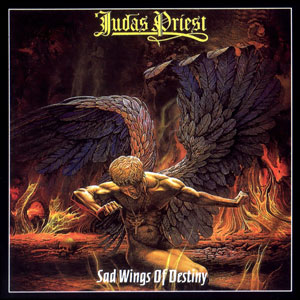
10) Victim of Changes from Sad Wings of Destiny (1976)

An inspiringly perfect heavy metal album. Victim of Changes is a track that represents the brilliant musicianship, darkness and power that the entire album executes. It was a face-off between this and Dreamer Deceiver/Deceiver as both similarly display all that is great with the Priest. Solos, soul, atmosphere and a vocal range to make changes well and truly come over your body.


9) Fever from Screaming for Vengeance (1982)

With an intro to send tingles down your spine, quickly disturbed by the sounds of KK and Glenn, it's not long before you're sent into a classic Priest sing-a-long. Much like other songs on 'Screaming' this song brings pure emotion and power in the heaviest form. Once again, it's difficult to choose just 1 track from this album- particularly when it's got numbers such as '(Take These) Chains' on it!

Fever all day and all night!

Image result for screaming for vengeance vinyl


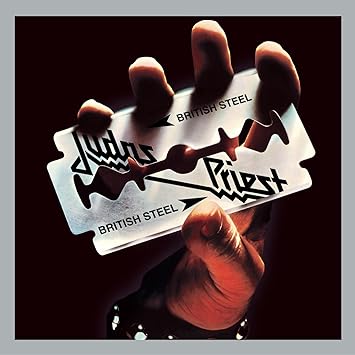
8) Rapid Fire from British Steel (1980)

If you're a Born Again regular, you'll know this is a tune we can't help but belt out every night. Heavy from the get-go with drums to bust your gut (forgetting for a moment that they're played by kiddie fiddling Dave Holland). Pounding the world with ultimate muscle, steel and speed! Rapid Fire is one of those songs that gets every part of your body moving. Proper British heavy metal!

Image result for judas priest british steel

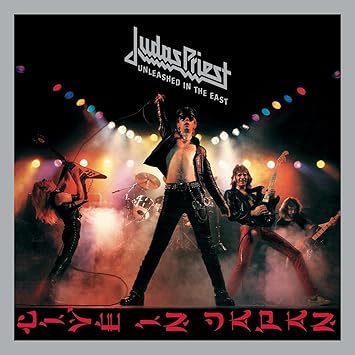
7) Diamonds and Rust from 'Unleashed in the East' (1979)

There are many variations of this song composed by Priest alone not to mention other artists. However, we didn't hesitate when thinking of our favourite version, found on Priest's 1979 live album 'Unleashed in the East'. It's raw energy transports you to to Tokyo where you find yourself in a trance; face screwed up and muscles contorted trying to replicate the KK/Glenn combo once again. Halford's vocals are truly flawless and knowing this was performed live makes it even more pleasing to listen to. 


6) Burnin' Up from Killing Machine (1978)

If there was ever a Priest song to 'sexy-dance' to, it'd be this. The suggestive lyrics, sensual guitar tone and Halford's sexually sinister vocals certainly do get you Burnin' Up. Perhaps not the greatest song on the album, but a song I often find myself having the urge to listen to and one rarely mentioned. Combined with 'Evil Fantasies', it makes you wonder what environment this album was written in! Whatever it was, I wanna be there!

Image result for judas priest killing machine

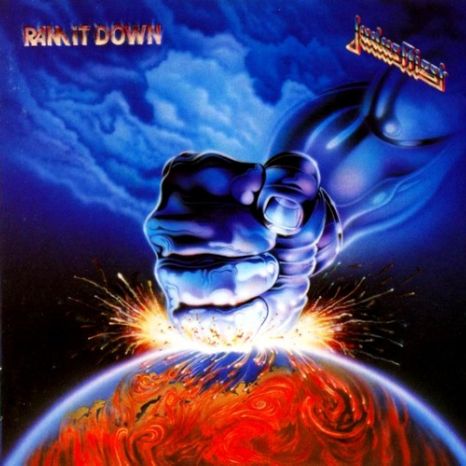
5) Blood Red Skies from Ram It Down (1986)

An ultimate for fans of  '80s heavy metal. The intro is a collection of acoustic sounds with the operatic vibratos of Rob reminiscent to that of a storm building. These sounds are soon shattered by those 80s iconic drums that give off enough reverb to shake you from within- tremendous! Halford's vocals in the verse are slow and subtle which only add more passion to those on-going screams and solos as the storm has well and truly kicked in.

Related image

4) Desert Plains from Point of Entry (1981)

An underrated album which holds one of my very favourite Judas Priest tracks. Although the version to beat is from Live Vengeance '82, I feel like giving Point of Entry some love is necessary! Desert Plains has some of the most impressive Priest lyrics yet, which are matched perfectly with the consistent pounding drums throughout. The KK- Glenn-Halford combo then takes the song to a whole new level with imagery of riding free evoking so much emotion. Arguably one of Priest's best tracks.


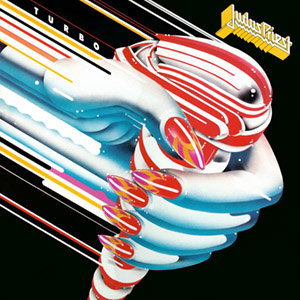
3) Out in the Cold from Turbo (1986)

Turbo, the marmite album in the Priest collection; loved by some, hated by many. The hate I never understood. An ultimate '80s party album which also gifts us with songs like 'Out in the Cold'. Another belter of  a track with once again a live version to die for ('Fuel for Life Tour'). The synths, the twin guitars, the reverb on that snare- it's tasty. Then, once again, Rob takes it to the next level with a combination of subtle smoothness and a slow build-up to the classic Halford-esque tones.

Image result for judas priest turbo


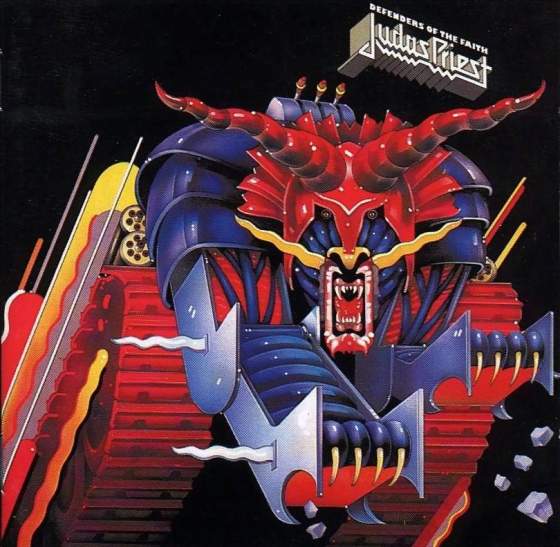
2) The Sentinel from Defenders of the Faith (1984)

I've always said, 2 of the very best songs ever written are Iron Maiden's Rime of the Ancient Mariner and Judas Priest's The Sentinel. Play one after the other and your head is well and truly ready to explode. This whole album is made of immense energy, rapidity and dominance and yet this song still manages to stand out. It's not just a song, but a powerful journey with many roads.

Related image


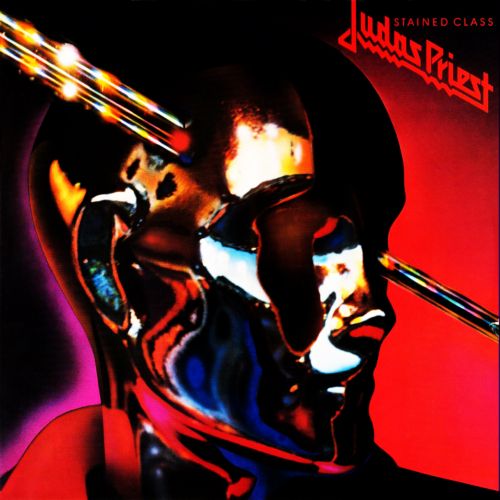
1) Beyond the Realms of Death from Stained Class (1978)

A masterpiece, difficult to sum up in just a few sentences. A power ballad in its own right, Beyond the Realms of Death has one of the best vocal performances in heavy metal history. When you add the phenomenal musicianship of KK, Glenn, Ian and drummer Les Binks to the mix, you get that classic Judas Priest sound with a little added extra. Combined with truly emotive lyrics and 2 guitar solos of dreams, you'll never want it to end. And, it doesn't have to! There are many live versions of this song, all incredible. You know what to do with the rest of your day. 

Image result for judas priest stained class

We want to know YOUR favourite Priest tracks!
Share them with us and we'll be sure to spin them come Saturday 9th December at The Black Heart in Camden!


Writer: Kayleigh MG

Friday, 11 August 2017

Connoisseur's Choice: Hidden Treasure - Ten Neglected Guitarists Worthy Of Your Attention


The genre of music known as "rock" has always been driven by electric guitar. Accordingly, over the years numerous six-string heroes have emerged and been feted by the masses. Names like Hendrix, Beck, Page and Clapton are familiar to many, it's safe to say. Then there's that category of players who perhaps aren't big names in the mainstream, but are common knowledge to any serious rock enthusiast. The skilled likes of Robin Trower, Frank Marino, Michael Schenker, Rory Gallagher, Uli Roth and Pat Travers would feature in this bracket. 

But, as is the way of the world, there have been other highly accomplished players who remain somewhat overlooked. They rarely crop up in 'top ten' lists, music histories or even banter between fans. So, just for the record, let's have a look at some outstanding guitarists of the '70s and '80s who - quite simply - don't get mentioned enough.


1. Ollie Halsall (Patto) 

Hailing from Southport, northern England, Peter 'Ollie' Halsall's career in music began in unorthodox fashion, as a vibraphone player with late '60s psychedelic soul outfit Timebox. Before long he had taken up the electric guitar, causing astonishment among bandmates with the speed of his development. Out of the ashes of this group, Patto was formed in 1970.

Stylistically this was a very different proposition, focusing on a unique hybrid of earthy hard rock with progressive elements. With the full-throated rasp of Mike Patto on vocals and Halsall's fretboard pyrotechnics, the band's potential appeared limitless.


Hold Your Fire, their second album, is perhaps the best example of the talent on offer. Recorded live on the studio floor with minimal overdubbing, this diverse collection of songs is the setting for some outrageous electric guitar playing. The left-handed Halsall plugs his white Gibson SG into a small Fender combo and proceeds to dazzle the listener with stellar rhythm work and a barrage of innovative, unpredictable lead lines. Nobody played like this back then - and they still don't. 


Following three sublime LPs with Patto - not to mention an unreleased gem in the form of the widely bootlegged "Monkey's Bum" - Halsall moved on, briefly joining Jon Hiseman's Tempest and immersing himself in session work. A reunion with Mike Patto in 1975 led to two albums with the under-appreciated Boxer, but much of the next two decades were spent as a sideman with Kevin Ayers.


Ollie Halsall died of a drug-induced heart attack in 1992.


Recommended listening: 

'Hold Your Fire' (Patto, Hold Your Fire, 1971)
'Give It All Away' (Patto, Hold Your Fire, 1971)
'Loud Green Song' (Patto, Roll 'Em Smoke 'Em Put Another Line Out, 1972)


2. Danny Kirwan (Fleetwood Mac)

Peter Green, founder of the original Fleetwood Mac, is revered by many as the master blues-rock guitar player, a musician whose legacy is simply untouchable. And rightly so. But there was another massive talent in that band, one that has been overlooked to a bewildering degree. 

I'm talking about Danny Kirwan. A melodious singer and skilled songwriter in his own right, when the young Brixton lad picked up a guitar, his soaring lead lines and devastating vibrato spoke for themselves. An innate sense of melody and soulfulness permeate every piece of music he involved himself in.


He joined the Mac in 1968, in time to appear on the band's acclaimed third LP, Then Play On. After Green's departure, he led the band through three further albums then commenced a solo career where, oddly, his guitar playing was far from prominent. Guest appearances with the likes of Chris Youlden, Tramp and Jo-Ann Kelly were rare but welcome reminders of his prowess as a picker. 


Sadly, his presence on the music scene ended with the release of his last album in 1979. Since then, stories of alcoholism and homelessness have circulated. Nevertheless it seems he is still out there, somewhere.


Recommended listening:

'One Sunny Day' (Fleetwood Mac, Then Play On, 1969)
'Blues With A Feeling' (Fleetwood Mac, Live At The BBC, 1968-70)
'Only You' (Fleetwood Mac, Live At The BBC, 1968-70)


3. Pat Thrall (Pat Travers Band, Hughes/Thrall)

A veteran of such diverse acts as Cookin' Mama, Automatic Man and Stomu Yamashta, Californian Pat Thrall came to the world's attention as second guitarist in the Pat Travers Band. Together, the two musicians created a formidable team that set new standards for guitar players the world over. Whereas Travers favoured a gutsy style firmly rooted in blues, Thrall carved a niche for himself as a forward-thinking rocker with unique, jazzy phrasing.

During this time, Travers spoke of Thrall as "exceptional" and his "favourite guitarist in the world". It's not hard to see why. His cohort had an unerring ability to create moments of jaw-dropping surprise on blues-rock standards that, in the wrong hands, could have easily drifted into the safety zone.


Moving on to collaborate with Glenn Hughes on the ill-fated Hughes/Thrall album, he became interested in keyboards and guitar synthesiser, but still found time for impressive soloing when the fancy took him. High-profile activity with the likes of Tina Turner and Meat Loaf followed, but in recent years he has tended to focus on studio work as both an engineer and a producer.


Recommended listening:

'Boom, Boom (Out Go The Lights)' (Pat Travers Band, Live! Go For What You Know, 1979) 
'Snortin' Whiskey' (Pat Travers Band, Crash And Burn, 1980) 
'Muscle And Blood' (Hughes/Thrall, self-titled debut, 1982)


4. Snuffy Walden (Stray Dog)

American-British power trio Stray Dog signed to the Manticore label in 1973 and secured the services of Greg Lake as producer. Their debut album remains a classic of its kind. This dazzling collection ranges from straight-up riff-rock to somewhat varied, left-of-centre stylings. Guitarist W.G. "Snuffy" Walden was the epitome of the swaggering, blues-heavy Les Paul player, a man whose fat tone and rude licks still resonate powerfully with devotees of this musical era. 

Friends and fans who witnessed early Van Halen performances have attested that the band covered material from the first Stray Dog LP during their formative years. Regrettably, Walden and co. lost momentum with a radical line-up change and ill-advised commercial approach on their second album. Along the way, Snuffy guested on the final Free album when Paul Kossoff was otherwise indisposed, made various high-profile session appearances and later went on to tour with the likes of Chaka Khan and Eric Burdon. 


Nowadays he is an award-winning composer and performer of film and television soundtracks, including The West Wing, Thirty Something, and The Wonder Years. Interestingly, all of this music has been written and recorded on acoustic guitar, an instrument Walden had rarely touched previously.


Recommended listening: 

'Tramp'
'Crazy'
'Speak Of The Devil'
 (all tracks from Stray Dog's self-titled debut, 1973)


5. Nono (Trust)

Norbert "Nono" Krief can surely lay claim to being the most significant guitar player in French rock history. But one could easily go further than that. In the zone where hard rock meets heavy metal, he has few peers anywhere. With the Parisian band Trust, he created a sonic identity that was unstoppable. While frontman Bernie Bonvoisin ranted about injustice in a vocal style that verged on punk, Nono busied himself with crafting some of the most indelible six-string moments of that time. 

A true all-rounder, his riffing was tight and disciplined. When it came to soloing, he played for the song. Devoted to strong, memorable phrasing that locked in with the band, Mr Krief was not a man to waste notes.

Trust disbanded in 1984, but have reformed several times over the years, while Nono has also appeared with highly regarded French artists like Johnny Hallyday and Fabienne Shine. He still performs live regularly and recently collaborated on an album with his son, David.

Recommended listening:
'L'Elite' (Trust, self-titled debut, 1979)
'Mr Comedy' (Trust, Repression, 1980)
'Repression' (Trust, Marche Ou Creve, France, 1981/ Savage, UK, 1982)


6. Paul Chapman (UFO)

Most hard rock fans are thoroughly acquainted with the work of Michael Schenker across the UFO catalogue of the 1970s. Unfortunately, it seems far fewer are aware of his successor, Welsh guitarist Paul "Tonka" Chapman. This is a genuine shame - the man's playing was superb. 

The task of following the German virtuoso might have been daunting to many, yet Chapman appeared unfazed, confidently laying out a style all his own with impeccable tone and moments of blinding speed. The band's albums from this period tend to be derided by those who favour borrowed opinions, but to this writer's ears, the music simply oozes class. 

Prior to his time in UFO, Chapman recorded two albums with the undervalued Lone Star. Later he appeared in a couple of different line-ups of Waysted, and is now said to be teaching music in Melbourne, Florida.

Recommended listening:

'Mystery Train' (UFO, No Place To Run, 1980)
'Long Gone' (UFO, The Wild, The Willing & The Innocent, 1981)
'We Belong To The Night' (UFO, Mechanix, 1982)


7. Mike Kennedy (Horsepower)

Little is known about the band Horsepower, besides one hard-to-find single, 'Outrageous', and an appearance on the second Metal For Muthas compilation in 1980. They were an American outfit who found themselves associated with the NWOBHM movement after relocating to the UK in the late seventies. If you stumble across a copy of their 7", I suggest you make a purchase - it's brilliant.

Both songs, the A-side and the flip, 'Highway Robbery', are infectious, gritty slices of heavy rock 'n' roll. The recording is as raw as you like, which only enhances the urgency of the material. You're drawn in by Steve Richter's commanding voice, then lacerated by the incisive lead work of Mike Kennedy. His phrasing is flawless, and underpinning it all is a knack for concise, catchy songwriting. 

The following years are murky to say the least, but it appears that Horsepower returned to their native Pennsylvania before long. An arcane cassette album, Stoked, was recorded and released, which later re-emerged on CD as part of a compilation simply entitled Mike Kennedy & Horsepower. It's clear that Kennedy's abilities as a writer and a soloist had not diminished even slightly.

Kennedy was also known as an avid collector of vintage guitars and amps, particularly Hofner and Vox. Sadly, he passed away in 2006 following a battle with cancer.

Recommended listening:
'Highway Robbery' (Horsepower, single, 1980)
'Outrageous' (Horsepower, single, 1980)
'She Gives Me Candy' (compilation track, Metal For Muthas Vol.II, 1980)


8. Paul Quinn (Saxon)

Paul Quinn (right) with Biff Byford.
While Saxon is hardly what you'd call an obscure band, the low-key demeanour of Paul Quinn has meant that he remains something of an underestimated figure in the guitar world. During the heyday of the NWOBHM, photogenic contemporaries like Dave Murray or Phil Collen were attracting plenty of media attention, while Quinn's labours were seemingly taken for granted. Strange, really, as the man has contributed some of the most enduring guitar work of that time. 

Whether it's his iconic, melody-driven lead lines or the occasional free-form flurry of notes, Paul Quinn rarely puts a foot wrong. It would be fair to say that the tones he laid down on these classic early albums have stood the test of time magnificently.


Recommended listening:  
'747 (Strangers In The Night)' (Saxon, Wheels Of Steel, 1980)
'Taking Your Chances' (Saxon, Strong Arm Of The Law, 1980)
'And The Bands Played On' (Saxon, Denim And Leather, 1981)


9. Floyd Radford (Johnny Winter)

Floyd Radford (left) and the Winter brothers.
There are those (this writer included) who consider Johnny Winter's seventies output to be the absolute pinnacle of rock guitar. Granted, everything he did was steeped in the blues, but the energy he brought meant that his music also appealed to hard rockers the world over. Perhaps the most remarkable phase of his career involved the addition of a second guitarist, something he'd tried a few years earlier with Rick Derringer. On this occasion his foil was the relatively unknown Floyd Radford.

This was a combination that yielded some amazing results - and for once, we're not using the word "amazing" lightly. Winter was generous enough to allow Radford plenty of time in the spotlight, the two pushing each other to ever greater heights. 

Listening to Captured Live, it is easy to differentiate between the two players. Johnny Winter was using a mild phasing effect, whereas Radford's tone remained relatively clean and direct. To say that the pair of them were "going for it" on this album would be something of an understatement - both sound supremely energised. The playing is heartfelt and swings hard, always remaining wedded to the band groove.

Anyone curious to hear some of Radford's other work can seek out the stand-alone album by his band Tin House (1971) and his fine recordings with Edgar Winter's White Trash.

Recommended listening:
'Roll With Me' 
'Bony Moronie'
'Rock 'n' Roll People'
(all tracks from Johnny Winter's Captured Live, 1976)


10. Laurie Wisefield (Wishbone Ash)

It's never easy replacing a popular guitarist - and Ted Turner in Wishbone Ash certainly had a keen following - but Laurie Wisefield was self-assured to enough to push the group forward into a new era of music making.  He had previously made a name for himself with the band Home, but his tenure with the Ash saw the man's style mature to a remarkable degree.

Taste and restraint were the order of the day. Wisefield was capable of scaring fellow guitarists with daunting lines when the occasion demanded, but primarily he focused on enhancing the band's vibe with timeless, elegant soloing. 

Like fellow guitarist (and band founder) Andy Powell, he understood the value of economy in music, both in terms of the notes played and the type of tone used. The result was a beautifully uncluttered sound that allowed the songs to breathe and gave the guitar parts maximum impact.

Following his departure from Wishbone Ash in the mid eighties, Wisefield went on to perform with Tina Turner, Joe Cocker and Roger Chapman. More recently, he has played guitar for the "We Will Rock You" musical, and established a new band, Snakecharmer.

Recommended listening:
'When You Know Love' (Wishbone Ash, New England, 1976)
'Persephone' (Wishbone Ash, There's The Rub, 1974)
'Midnight Dancer' (Wishbone Ash, Front Page News, 1977)


Listen to the playlist on Spotify.


Writer: George Colwan